Derrick Rose: The Thorn That is the NBA’s 2011 MVP

Derrick Rose

In 2011 the Chicago Bulls beheld its newest star.  He was an athletic young freak with blazing speed and agility both below and above the basket.  His drives required slow motion to adequately digest and his dunks spurred YouTube’s rise as basketball’s new posterization.  He was Derrick freaking Rose.  The team soared with his every achievement.  They posted the best regular season record in the NBA with 62 wins, entered the playoffs as the #1 seed in the East, then lost to the Miami Heat in the conference finals in 5 games.

The loss stung, but the Bulls could hang their coat on their first MVP since Michael Jordan and the youngest recipient of the award in league history.

Funny thing, though, few seem to think twice about it.  Few seem to acknowledge Derrick Rose didn’t really deserve the award, let alone by the absurd margin he won by.  112 of 120 first place votes suggests an all-time dominant season.  For a 22-year-old, former 1st overall pick and Exhibit A of basketball’s new breed of point guard it may very well have been.  Compared to his two nearest competitors it most certainly was not.

Regrettably the byproduct of this discussion is negativity, no doubt to be perceived by many as excessive in light of Rose’s recent injury woes (he’s played 49 games over the past 3 seasons).  This isn’t meant to be a salvo of criticism upon Rose so much as it is against the voting body and it’s regrettable tendencies.  Equally, it’s meant to highlight the superiority of the 2nd and 3rd place finishers, Dwight Howard and LeBron James respectively.

Let’s get the simple number comparison between the top 3 vote getters out of the way early: (View at Your Own Risk)

So there’s that.  I won’t delve into these numbers further since I don’t want to find myself cherry-picking the stats which support my argument, a folly too many commit.  But for what it’s worth I think James clearly outperformed Rose, while Howard mirrored him almost exactly.

In any MVP discussion there needs to be an understanding the definition of “Most Valuable Player” varies from person to person.  Does it reward the best statistical season?  If so which stats?  Does it depend on the team’s record?  What’s the player’s salary?  How marketable are they?  I’ll leave those questions to you.  I’m merely focused on the forgotten narrative, the fascinating blend of ingredients that conspired in Rose’s runaway MVP victory…

Conspirator #1: “The Villain”
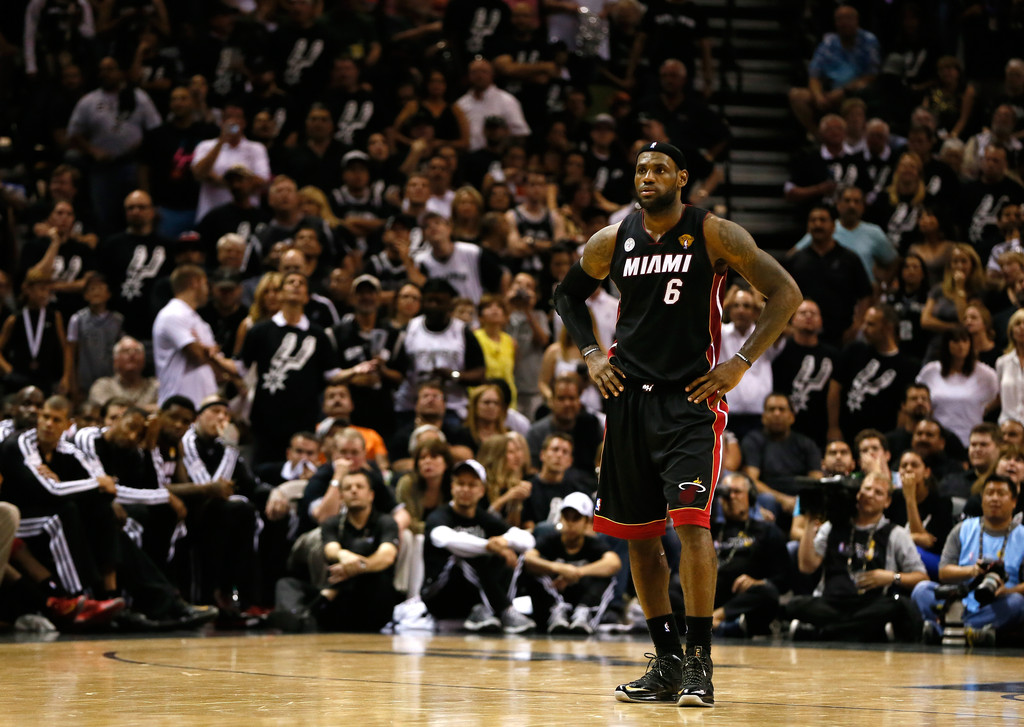
As LeBron James continues to ascend the Mount Olympus of NBA greats – as he stars in more and more fuzzy commercials showing his paternal, personable and proletariat side and tacks on to his multiple championships and 5 MVPs, each chipping away at the all but faded opinion he was a choker – it’s easy to forget he was the most detested figure in the NBA.

That was a mere 3 years ago, back when Call Me Maybe was climbing the charts.

Upon issuing his infamous South Beach declaration, the world descended into an incredulous inquisition of the King.  Louis XVI can relate.  The preseason boiled with talking heads and experts postulating the possibilities.  Would the Heat win 75 games?  Would they collapse under the pressure?  Would LeBron or Wade be the alpha dog?  The subtext though was always cynical, or skeptical, and often fanatical.  The fans, you see, devised ways to tear down Colossus.

James endured what may be the most intense season of scrutiny, fickle revisionism and biased criticism in NBA history.  The emergence of social media platforms dove-tailed with 24-hour sports news ensured LeBron remained submerged under a slab of public opinion with no way out, like an intrepid hunter fallen through the ice.  The only air pocket being an NBA championship, it was frozen over by Dirk Nowitzki and the Dallas Mavericks in the Finals, just out of James’s grasp.  Trapped.  Above the critics strode upon the surface, gazing below, mocking LeBron’s every doomed stroke.

While King James put up his worst statistical season in years, that’s like saying The Beatles’ Abbey Road wasn’t Sgt. Pepper’s.  He still posted the best PER and win-shares in the league, among numerous other top 5 category finishes, while helping the Heat to 58 wins and the 2nd seed in the East.  He was the rightful king.

The basketball world took him for granted.  People used the spurned self-pity of the Cleveland faithful to manifest their own self-righteous feelings toward LeBron, the “spoiled star athlete.”  Detractors would overrate the influence of Wade and Bosh on LeBron’s successes, and underrate it on his failures.  Writers acknowledged the clamor for the guillotine, heeded the feedback from its critical, mistaken readers and voted for Rose, as if making a statement on behalf of the masses and shunning the future certainty people would actually double-check the statistics and judge their work with equal blog-worthy disdain.

That’s me.

Howard meanwhile, though not the hated man he became a year later when he began engaging in childish antics with the Orlando Magic about whether he would stay with the team or become a free agent, encountered another type of bias…

Conspirator #2: Misevaluation of Defense
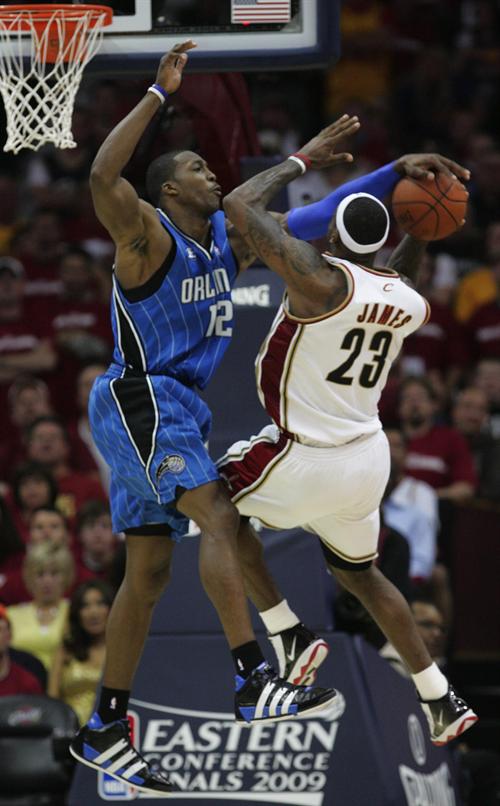
Howard vs. LeBron

Offense draws eyeballs.  Fans in every sport since the dawn of time have thirsted for the glamour and drama of the attack.  Understandable, but defense is of equal importance.  When determining the league’s most valuable player, it’s an often minimized characteristic when the ballots are cast.

Now, Derrick Rose was an able defender in 2011.  Some even argue he was vastly underrated.  Either way he falls short when compared to the elite – as in the 2 best defenders in the league elite.

Both Howard and LeBron were fierce in their own end of the court in 2010-11, earning themselves 1st All-Defensive Team nods while occupying top spots in most defensive metrics.

James is unfortunately never given the proper credit for his defense.  At multiple points in his career he’s been both the best offensive player and defensive player in the league.  His ability to guard opponent’s best players consistently – regardless of position – is nearly unprecedented.  Even so, the outdated notion only a big man can be the best defensive player persists.

Howard, though, is a big man.  In 2011 he was a paragon of defensive dominance, winning his third consecutive Defensive Player of the Year Award.  He did so while maintaining excellent offensive production (FT% and passing ability besides), leading the Magic to the 4th best record in the East.  If Rose received credit for improving his defense, D12 should’ve felt the love for his offense.

So defense wasn’t given it’s proper due, what else is new?  Surely there was something else aiding Rose’s cause…

Conspirator #3: The Boredom Complex

Sports writers have a propensity to, at times randomly and at other times prompted by the slightest change in perceived momentum toward another competitor, vote for someone undeserving of a major award.

Co-conspiring against James and Howard were their trophy cases.  James won the previous two MVPs, Howard the previous two DPOY awards.  When it comes to award season, recent success actually hurts a player’s chances.

Howard’s 3rd defensive distinction in 2011 impacted his MVP vote totals, too.  “If I vote Howard for DPOY I can vote someone else for MVP” was the likely thought process, instead of allowing the award to help his case for MVP.

For James it would’ve been along the lines of “Well he always wins it, and he’ll win more in the future… let someone else have it.”  Even when looking at this year’s MVP decision between Kevin Durant and LeBron, doesn’t it seem odd the vote ended in a landslide?  I mean 119 first place votes to 6 in favor of Durant?  Sure he deserved to win, but it was a dead heat for most of the season.  Someone even voted LeBron 3rd behind Blake Griffin!  Maybe I’m looking too much into it, but voter shadiness is beyond frustrating.

You know the league loves it, too.  The more MVPs and new stars the more marketing opportunities.  Routine is boring, even if it’s exceptional.  People want the next big thing, and in this case a young athletic point guard fit the bill perfectly.  He embodied boredom’s antithetical sibling: excitement.

There is no denying Rose’s ability to draw one out of his or her seat.  He was widely regarded as the most exciting player on the court, thanks to his equine abilities.  But the brightest coals don’t produce the most heat, and the voters let the shiny object distract them from the best toys in the play pen.

Conspirator #4: The “He’s Does More With Less” Misnomer

The popular axiom of the year was the notion Chicago had inferior talent compared to the other contenders; that is, Derrick Rose prodded the Bulls’ success in spite of his teammates.  Much of this was incorrectly based upon Chicago’s previous season when they finished 8th place and endured a quick 1st round exit thanks to the LeBron-helmed Cleveland Cavaliers.  But during the offseason the Bulls were not idle, nor were they sitting with a bunch of plugs on their roster.

Rose (With Other Good Players)

Rose (With Other Good Players)

Joakim Noah

Today he’s widely considered one of the best centers in the association, and he possessed the same talent in 2011 that makes him the Bulls’ best player in 2014.  His defensive prowess, rebounding bravura, and impeccable passing skills were all present during Rose’s peak, though less developed.  The point is Derrick Rose had an emerging superstar to help him out down low, something most guards never have the luxury of.

Luol Deng

While no superstar, Deng was one of the best secondary options in the NBA for years.  He was a perfect fit for Chicago’s defensive system under Tom Thibodeau, guarding the perimeter and providing effective offense, especially when left open during a Rose assault to the lane.  He would become a two-time All-Star in 2012 and 2013.

Carlos Boozer

If LeBron stayed in Cleveland, Boozer would’ve garnered far more headlines as one of the biggest offseason moves of the year.  Chicago signed him to a 5-year, $80 million contract after all.  Instead, the former US Olympian was virtually forgotten, left to “succeed quietly” for the Bulls while “the Heatles” hogged all of the attention.

The rest of the roster was admittedly poor, but it still had 3-ball specialist Kyle Korver, Turkish import Omar Asik, a rookie Taj Gibson and veteran Ronnie Brewer.

The Heat, beyond the Big 3, had the superstars known as Mario Chalmers, Zydrunas Ilgauskus, Udonis Haslem and about a dozen other veteran misfits fighting over the scraps of the head table.  Hardly impressive.

The Magic had a lot of names you’d recognize, but if you can transport yourself back to 2011 you’ll remember Howard’s best wingman was Jameer Nelson.  Yikes.  Ryan Anderson wasn’t Ryan Anderson yet.  Vince Carter was still “post-Nets Vince Carter,” and guys like Hedo Turkoglu and JJ Redick didn’t do anything out of the ordinary.

The Bulls’ pieces fit.  While they certainly didn’t have the star power of the Miami Heat, they were a far cry better than claimed, and borderline dominant next to the lack of skill Dwight Howard had around him in Orlando. Either way stop with the no talent junk.  Especially when…

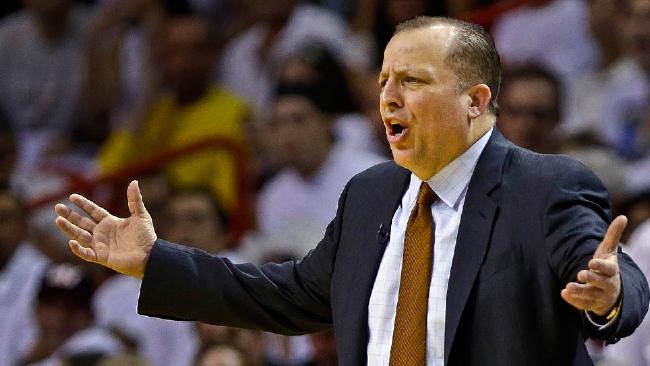
Conspirator #5: Nobody Knew Coach Thibodeau Was Amazing
Thibodeau

When the Bulls vaulted to 62-20 and the #1 seed, everyone pointed to D-Rose.  What else could it be?  “Sure Thibodeau is doing fine work” they’d say, “but it’s not hard when you have Derrick Rose.”

If you polled the same people again today, how many would change their answer?

Tom Thibodeau was a first-year head coach, brought over from the Boston Celtics after years serving and learning under Doc Rivers.  Today he is regarded as one of the top coaches in the league.  His defensive schemes and ability to inspire maximum effort and responsibility to the team are renowned.

Having Rose in ’10-’11 was nice, but recent history shows he wasn’t vital.  The Bulls have accomplished the following since Rose went down during the 2011-2012 season:

2012: Repeated as the #1 seed and tied for the best record in the NBA, losing to the 8th-seeded 76ers in 6 games after Rose was re-injured in Game 1 and Noah missed Games 4-6 with a foot injury.

2013: Won 47 games and the 5th seed, losing to the Heat in Round 2 despite Rose missing the entire season.

2014: After Rose went down for the season after only 10 games, the Bulls went on to win 48 games and the 4th seed, losing to the Washington Wizards in Round 1.

This doesn’t mean Derrick Rose isn’t valuable.  You don’t see any NBA titles or Finals appearances in the above list, and his absence may be the reason why.  This is merely to show how effective Thibodeau was and is as a coach, how he’s been able to overcome and succeed despite losing his best player – to show Chicago’s real 2011 MVP didn’t wear a uniform.

I think we can all agree 2010-2011 presented us with one of the most contentious MVP races in recent memory.  I hate pushing back against a genuinely superb year for our victor, Derrick Rose, and 2,200 words seems unnecessary when looking at his individual and team accomplishments, but I can’t deny my hatred for mercurial hype in the face of logic.  Would LeBron have won had he been traded to the Heat, or if he broke the news of his signing in a statement?  Would Howard have won if he made more highlight reel plays, or didn’t play in Orlando?  What if Tom Thibodeau was in his 2nd year as the Bulls head coach?  What if it was 2001, without 24-hour sports coverage, Twitter and blogs (#hypocritesighting)?

Does it matter?  Probably not, but it’s fun to talk about.  The factors may be too many to weigh, but I’m convinced Derrick Rose’s side of the scale had 5 helping fingers pressing it down.

The Most Game-Changing Athletes In The Last 20 Years

People like to debate the best.  Deciding the best movies, best restaurants or best bands is sure to spurn you into the cranium’s filing cabinet like little else.  If I say Catcher in the Rye is the greatest American novel ever, you’ll have a list of reasons why it’s The Great Gatsby.  Well nothing gets a sports fan leaning across the table in anticipation faster than posing the question, “Who is the best athlete of all time?”

John Daly Is Probably Your Answer

If You Said John Daly, You Win

There are variations of the above query, each as engaging as the next.  So I pose my own challenge:  Who are the most game-changing athletes of the last 20 years?

Game-changing is not the same as best.  It’s more like transcendent.  You need to think of athletes who weren’t just good, but who changed the way people thought about his or her sport.  Who started trends lasting years into their careers or after they retired?  Who could force you to jump out of your seat and think “I may never see something like this again.”  There aren’t many.  Entertainment is the key component.  We watch sports because it involves the extraordinary.  The funniest comedians or the most inspirational films are often the most original, as are the most awe-inspiring athletes; those who can do what most cannot.

In the interest of time and effort, I’ll keep it to the four major sports, so don’t cry when you notice an absent Tiger Woods, Jonah Lomu or Serena Williams below, to name a few.  So, beginning with two exceptions, here are the most game-changing athletes, in the 4 major North American sports, of the last 20 years:

Special Exceptions:

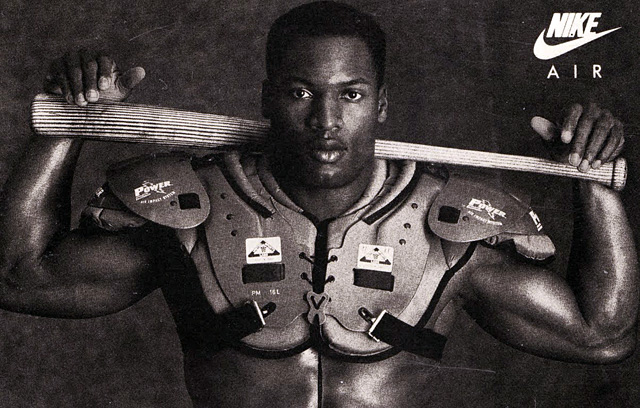
Bo Jackson and Deion Sanders.  These guys, both NFL and MLB stars, made ordinary single-sport athletes boring.  While there were many baseball/football professionals before them (and a handful afterward), Bo and Deion rectified the feat at the highest level in the modern era.  They put the marketing money machine into overdrive.  We love multi-sport athletes because God wasn’t supposed to make stars in more than one, especially sports requiring such a special blend of size, strength, agility and speed.

Bo Jackson was simply better than everyone else, and is arguably the best athlete of the 20th century.  The brightest flames burn fastest, however, as he was only around a few years before a dislocated hip he suffered during a football game in 1991 essentially ended his career.  Yet before his retirement(s) he became an all-star in both the NFL and MLB, the only person to do so.  He was also an elite track star in college, and he holds the record for the fastest 40-yard dash time at the NFL Combine at 4.12 seconds, an absurd quality in light of his massive build.

Absurd

Above: Absurd

His numbers, frankly, are modest, but anyone who watched Bo play could see beyond the statistics.  In baseball he compiled a career .250 average with 141 home runs in 694 games.  The homers are nice (could he have hit 500?), but his career 841 strikeouts, .309 OBP and .474 OPS are nothing special.  Yet along with his obvious power advantage, it was his base-running and fielding abilities that set him apart, thanks to his conflagrant speed and Hellboy arm.  He probably would’ve broke YouTube if he and his many highlights occurred today.

Even though he preferred baseball, many argue Jackson’s real prowess was in football (Bo considered playing football in the offseason a “hobby”).  After winning the Heisman trophy in 1985, capping off a historic four-year run at Auburn, he began his NFL career with the LA Raiders two years later.  As a backup to Hall-of-Famer Marcus Allen, he dazzled in 4 NFL seasons by way of some of the most dominant running performances ever seen on a football field.  He would bowl over linebackers then sprint past defensive backs, seemingly mutating mid-run from tractor halfback to Ducati wideout.

The spectacle around him was intense.  “Bo Knows” is an iconic marketing campaign, vaulting Nike ahead of Reebok and redefining what people thought about the potential of the human body.  He even tried his hand at semi-pro basketball to push the multi-sport angle before focusing on his baseball comeback.  Due to injuries and his attempt to balance two jobs, he remains the epitome of the “What if?” athlete….

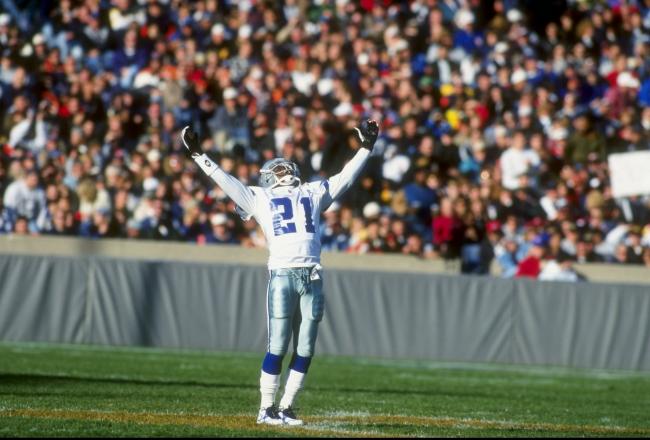
Deion Sanders would often say “football is my wife and baseball is my mistress.”  While he never came close in baseball to his Hall of Fame career in football, “Prime Time” joined, and ultimately succeeded, Bo Jackson as the face of the dual-sport athlete.

Primetime

Not That He Craved The Attention Or Anything…

In baseball, he relied on his track star speed to be effective (coincidentally, his 4.27 second Combine time stood 2nd behind Bo Jackson’s record for 16 years).  However, effective was all one could really call him, and not even that since he played over 100 games just once in his 9-year career.  He led the league in triples in 1992 with 14 and finished second in the NL with 56 stolen bases in 1997, but his career highlight came during the 1992 World Series when he hit .533 with a broken foot bone.

In football he is perhaps the best cornerback of all time.  Maybe the best punt/kick returner too.  Not bad.  He racked up over 5500 punt/kick return yards with 9 TDs, and, while this is an incomplete measure of a defensive back, 53 career interceptions with 9 TDs.  Oh yeah, he also had over 700 career receiving yards.  He won the Defensive Player of the Year in 1994 and was an All-Pro an obscene 8 times.  He won a Superbowl with the 49ers in ’94 and with the Cowboys in ’95.

Needless to say, “Neon Deion” was an incredible athlete.  Like Jackson, the endorsement angle garnered him a massive amount of attention, boosted by his flamboyant personality and famous “do-rag.”  It’s hard to imagine an athlete garnering more of a following over such a large percentage of the sports world.

—————————

Alright, with those two out of the way, let’s get to the “mere” single sport game-changers:

National Football League

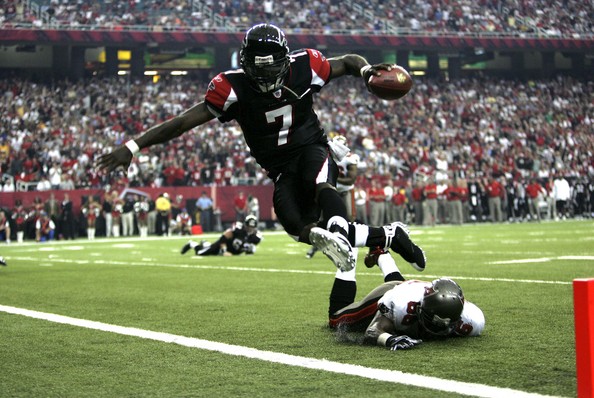
I’ll start with the NFL because it’s the easiest.  It’s Michael Vick and it isn’t close.

Sports+Pictures+Week+September+18+l3DObhY5A6Tl

We’ll Leave The Dog Fighting Stuff Out Of It

First of all, it has to be a quarterback.  Running backs run, wide receiver catch, and defenders tackle and create turnovers.  Those are generalizations, obviously, but it doesn’t matter.  Quarterbacks have and always will dominate the game.  When you throw Vick into the cauldron, someone who at his peak could throw as hard as anyone and be literally the fastest player on the field most games he played in, the new concoction posed an unprecedented challenge to NFL defenses.

Once selected with the 1st overall pick in the 2001 draft by the Atlanta Falcons, Vick quickly became the game’s biggest star.  His running ability was exhilarating, and when healthy he racked up numerous rushing records.  In 2006, the only season he played all 16 games, he became the only QB in history to rush for over 1000 yards.

He saturated the headlines and significantly influenced the direction of the league.  Since 2001, how many teams have sought out, or at least secretly desired, running quarterbacks to build their teams around?  Most of them is the correct answer.  The scoring potential is simply too great, to say nothing of the potential ticket sales.  Fans are fickle, entranced by the “next big thing.”  Alex Smith, Philip Rivers, Ben Roethlisberger, Vince Young and JaMarcus Russell were all selected with top picks, all of them “dual-threat” helmsmen.  It’s a big reason why NFL teams still can’t seem to give up on Tim Tebow.  In fact, Vick was so dynamic at the pro level, college teams soon realized they could recruit the best athletic quarterbacks if they tailored their offenses around the Vick prototype, since those QBs would have a greater chance of being drafted.  Chris Ault’s University of Nevada pistol offense, famous for popularizing the read-option with Colin Kaepernick, is a great example of this.  Today, a new wave of athletic quarterbacks like Cam Newton, Robert Griffin III, Russell Wilson and the aforementioned Kaepernick are the league’s poster boys.  Even Andrew Luck, a good runner himself and the best pocket passing college quarterback since Peyton Manning, has his doubters because his running ability doesn’t match those of the above group.

Sure there were other dynamic running quarterbacks in our 20-year window.  Steve Young, Randall Cunningham and Donovan McNabb, amongst others, were around before Vick showed up.  But none of them could, or more importantly, wanted to run like Vick.  In hindsight, that was often Vick’s undoing, as he bailed on his progressions much too soon too often, giving defenses an out and often getting hurt in the process.  He has some years left to make improvements, but his passing ability is simply too one-dimensional; great strength but little touch.  That is, with the exception of 2010.  It’s no coincidence his most successful season was easily his best passing season:

13 GS, 68.01 QBR, 62.6 Cmp%, 3018 PaYds, 21 TDs, 6 Ints… with 676 RuYds, 6.8 RuAvg, 9 TDs

There are certainly better players in the last two decades, especially when you include Vick’s humble playoff abstract.  But considering the definition of “game-changing,” Vick’s never-before-seen skills at football’s most important position revolutionized the modern NFL unlike anyone else.

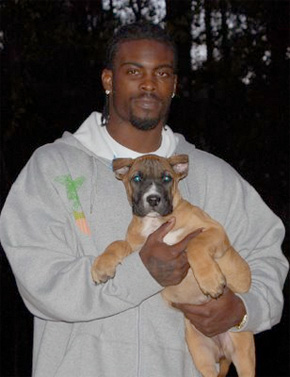
Alright Fine, One Dog Photo

Alright Fine, One Dog Photo

Honorable Mention: Peyton Manning and Tom Brady, because they’re maybe the two best quarterbacks ever… and for the token non-QB let’s go with LaDainian Tomlinson, the man ostensibly traded for Vick on draft day.

Major League Baseball

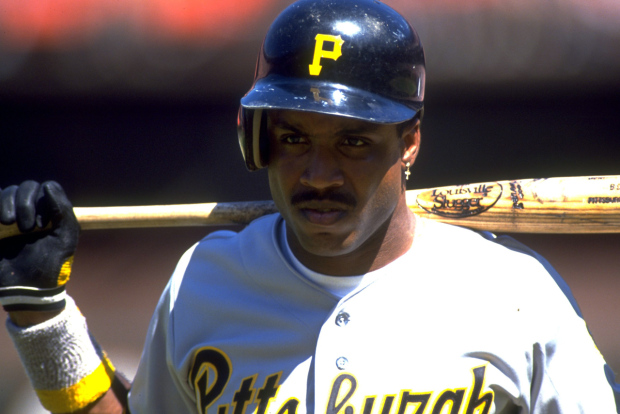
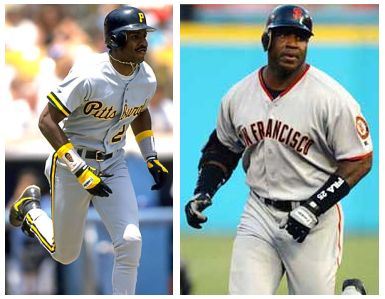
Steroids changed baseball forever, which muddles and clarifies this argument at the same time.  It’s Barry Bonds.

You can argue Mark McGwire and Sammy Sosa started the whole thing with their magical 1998 single season home run record quest, but Bonds trumped it and more.  Not only because he smashed McGwire’s record with 73 HRs in one season, not only because he surpassed Hank Aaron’s all-time record of 752 HR, but because he serves as the poster child for PED transformation.  No one was as talented before AND after using steroids.  Not A-Rod.  Not McGwire.  Nobody.

barry_bonds_285036_620x414

No One Was Angrier Before And After Either

In the early 1990s, Bonds was simply the Hall of Fame progeny of former MLB all-star Bobby Bonds.  He was well on his way to becoming one of the best players of all time, both offensively and defensively. He was a superstar, despite his abrasive nature, and relished the accolades he’d garnered all his life.  Enter 1998, when he watched his NL throne (Ken Griffey Jr. owned the AL) usurped by two massive, 500-foot homer smashing guys in St. Louis and Chicago.  What were McGwire and Sosa doing to make themselves so good?  Bonds knew, of course, and he couldn’t stand missing out on the fame and fortune steroids provided.

His body transformation is the butt of many jokes, as it should be.  His head and feet size increased significantly, as well as his body.  Well so did his stats.  In the 5 seasons from 2000-2004 and between the ages of 35 and 39, he won 4 MVPs, hit 258 HR, posted an 872:316 walk-to-strikeout ratio, and earned an OPS of 1.316.  That doesn’t even sound real.  He was so feared teams would often walk him with no one on base, and he was once intentionally walked with the bases loaded!  The best player of our generation was now arguably the best player ever.

As Bonds chased down Hank Aaron’s all-time home run mark, the heat approached nuclear on the steroid issue.  As years have passed cheaters have been caught, suspended, caught again, subpoenaed, brought before congress, or disowned by most of baseball, evident by the recent Hall of Fame vote when no one was selected.  Even still, drugs are an unfortunate part of the game’s history (though they were technically legal).  As time crawls by and the scope of the problem becomes clearer in the rearview mirror, the opinion of Bonds is almost softening, because we don’t really know what to think of it all.  All we know is Bonds is the example used by both sides of the argument… and our argument.

(Both Sides Of The Argument)

(Both Sides Of The Argument)

Honorable Mention: It’d be nice if I could present to you a (presumably) clean list, but over the last 20 years steroids have defined baseball.  For argument’s sake I’ll go with Griffey Jr., Albert Pujols, Randy Johnson, Pedro Martinez and Mariano Rivera.  Unfortunately, Alex Rodriguez is the appropriate answer.  A-Rod has taken up Bonds’s mantle, both because of his pre and post steroid success, and because he’s equally despised.

National Basketball Association

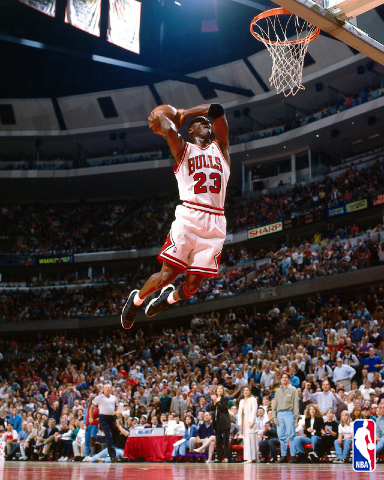
Now it’s getting tough.  I’d really like to proclaim a tie for this, but that’d be like proclaiming a tie.  No good.  It’s basically one guy’s 2nd half career vs. another guy’s 1st half.  So with a very important honorable mention, I’ll go with Michael Jordan.

michael_jordan-1166

Or Air Jordan If You Prefer

At first thought I’m crazy to suggest otherwise.  He’s the best player ever.  It’s blasphemy!  But remember, in the last twenty years we only have half of Jordan’s resumé.  Since 1993, it includes three retirements, a mediocre one-year stint in AA baseball and an awkward two seasons in Washington to round out his NBA career.  On the other hand, he has 4 titles, numerous awards, all while looming as the richest marketing juggernaut in sports history.  Sure my 20-year deadline is a technicality, and it’s fair to include at least a residual effect of Jordan’s monumental achievements prior to ’93, but there’s a significant argument to be made that LeBron James deserves the most game-changing title in the last two decades.  (For those of you who expected me to say Kobe, you’re excused).

Jordan, though, made basketball the most popular sport on the continent for most of the 1990s.  His dominance was everywhere.  On the court, he played with a nightmarish intensity every single game.  He employed a relentless offensive and defensive attack, and like many of top athletes he seemed to always improve.  He began as an average shooter only to become one of the best ever.  When age began to catch up to him he developed his famous fadeaway jumper,  the most unguardable shot ever behind Kareem Abdul-Jabbar’s skyhook.  If you like numbers, he accomplished the following (I’ll go with his whole career for simplicity’s sake):

5 MVPs, 6 NBA titles, 6 Finals MVPs, Rookie of the Year (1983), Defensive Player of the Year (1988), 10x All-NBA First Team, 9x All-Defensive First Team, 14x All-Star…

27.9 PER, 32,000+ Points, 2500+ Steals, 5600+ Assists,  6600+ Rebounds, Career 49.7 FG%, Career Playoff 28.6 PER, Career Playoff 48.7 FG%…

Merciful Christ.  The only noteworthy “mediocre” part of his game was his 3-point shooting and turnovers.  Some like to point out he played against softer competition, but keep in mind in his era hand-checking and hard fouls were commonplace.  Had he not retired twice, who knows how far apart he’d stand from the rest?

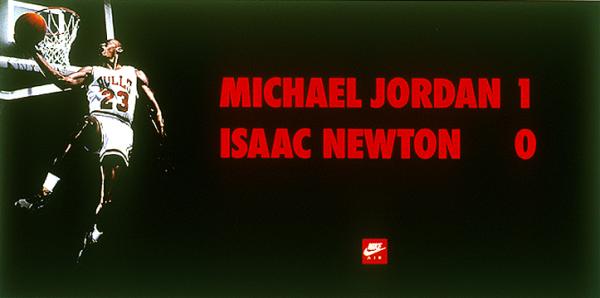
Off the court, he was the most recognizable athlete on the planet.  Endorsements with the likes of Nike and McDonalds, commercials, books, a clothing line and even the movie Space Jam all served as conduits for his larger-than-life persona.  In fact, in regards to Nike alone he might be the most game-changing athlete of all time, since the golden age of endorsement deals dawned with Jordan’s success.  Incredibly, he still makes an estimated $60 million per year from his stake in the Air Jordan brand.

nike-sportshoes-michael-jordan-small-24958

I Assume This Refers To The Fact Newton Never Made 60 Mil

Honorable Mention: King James is simply the most physically dominant basketball player since Shaquille O’Neal, if not ever.  The fact LeBron not only can, but consistently does guard every position on the court at an elite level is astounding.  His lack of a Defensive POY award is criminal.  Early in the 2012-13 season, he guarded Utah’s star center Al Jefferson in the 4th quarter, limiting Jefferson to maybe 2 or 3 touches.  Literally.  The next night, he guarded First Team point guard Chris Paul for large chunks of the game and shut him down.  He does this while maintaining Jordan-esque stat lines. He’s en route to his 4th MVP award, and in the brand department he’s a real challenger to becoming the first billionaire athlete.  But it’s clear while his 8+ years in the league have been nothing short of spectacular, he needs a few more years, rings and shoe designs to compete with His Airness.  As for Kobe, he’d be my fourth choice, behind James, Shaq and Kevin Garnett (as he was the catalyst of late 90s prep-to-pro players).  I don’t care if Jordan would start a franchise with Kobe… his judgement of talent is the one thing he’s terrible at.

National Hockey League

You see the pattern here, right?  The choices are getting harder, the answers as definitive as a bar room census.  Well here’s an easy one…

Nope.  Still hard.  Because it’s not Wayne Gretzky.

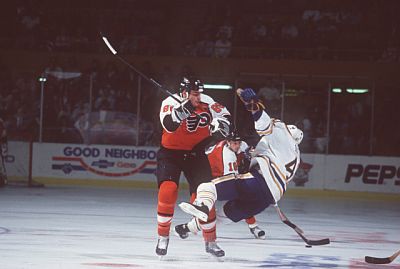
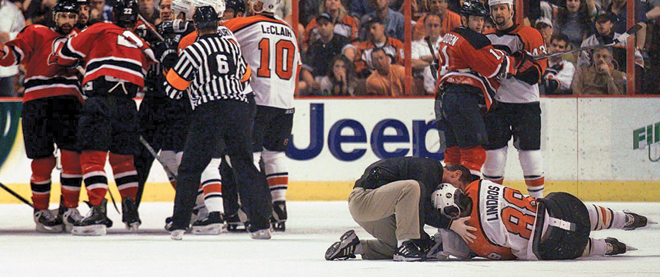
First of all, like Jordan, most of Gretzky’s dominance was prior to our 20-year cutoff.  Now, as with Jordan I’m going to acknowledge the legacy he built before ’93 was so mythical even his post-’93 shadow is tough to consider as anything but game-changing.  And it is.  But here’s the catch:  With Jordan, people felt he could still be matched or surpassed, even after he retired.  Whether through Kobe Bryant, Vince Carter or LeBron James, people felt – and still feel – like the NBA’s all-time crown is attainable.  In the NHL, Gretzky is so far ahead of anyone else (other than Bobby Orr) that by the time Mario Lemieux first retired and Scott Stevens almost killed Eric Lindros people just set him aside in his own category.  His legacy didn’t change the game because nobody could ever hope to duplicate it.  Sure, there are some born within our 20-year timeline who think Sidney Crosby will compare, but everyone grows up sometime…

So apply that context to the 90s hockey scene.  Most hockey fans and pro hockey brass were asking a lot of “what nows?” and “who’s next?” Who can we adore and idolize now that the best has left us?  Who can transcend and change the game?

Hockey is last for a reason.  This isn’t easy.  But out of the long list of candidates, I’ll go with the player who redefined the power forward prototype, the aforementioned Eric Lindros.

He's The Mutant On The Left

He’s The Mutant On The Left

Let’s start with the setting.  Throughout the 80s and early 90s scoring in the NHL was the highest it had been in 50 years.  After the player’s strike in 1994, things began to change.  Over the next decade scoring declined significantly, as defensive systems (the trap) and lax penalty standards suffocated the skill game.  Eric Lindros entered the league in 1992, the early stages of this transition… and he was perfect for the new NHL.

Lindros entered the league amidst incredible hype, proclaimed as hockey’s next Cam Neely and Messiah.  He was selected #1 overall by the Quebec Nordiques in 1991, only to be traded to the Philadelphia Flyers shortly thereafter in the weirdest draft saga ever (just look it up).  Upon finally making his league debut in 1992, Lindros quickly became stardom’s VIP.  He could score, pass, hit, and fight at an elite level; his punishing style of play made him the most devastating force in hockey.  In his first 5 seasons he had one of the highest PPG averages of all time.  He captained the Flyers and anchored the famous “Legion of Doom” line with John LeClair and Mikael Renberg. In his 1995 MVP season he scored 47 goals, 115 points, 163 penalty minutes and was +26  in only 73 games.

He formed the mold for what NHL teams lusted after in the new gritty league: Big and fast with a scoring touch.  Joe Thornton, Vincent Lecavalier, Rick Nash and Eric Staal were #1 picks for a reason.  Guys like Jarome Iginla, Jason Arnott or Glen Murray became prized possessions.  In junior, size and strength became baseline qualities in scouts’ eyes.  If you were small, you better be other-worldly to stand out among the big boys.  In other words, Lindros had an almost Vick-like effect on the National Hockey League and its farm systems alike.

What makes Lindros such a debatable pick is his longevity.  For about 3 years he stood atop the sandpile, but his reckless style wore him down with injury (he sounds like Vick more and more).  After the Scott Stevens hit (and a convenient contract dispute) kept him out of hockey for a year with a concussion, he was never the same.  He experienced 8 concussions throughout his career.  Even so, every team sought “the next Eric Lindros” all the way through the 2004-05 lockout.  Even after the missed season, someone remotely approaching Lindros’s blend of speed and size is an indispensable commodity.

Yi

So Long As Stevens Doesn’t Come Out Of Retirement

Honorable Mention: Gretzky, Lemieux, Mark Messier, Brett Hull & Steve Yzerman were all at their peak before 1993 and certainly better than Lindros.  Jaromir Jagr and Nicklas Lidstrom were contemporaries of Lindros and deserve mention.  Patrick Roy, Martin Brodeur and Dominik Hasek were the goalie considerations, but Jacques Plante and Vladislav Tretiak beat them to the “game-changing” punch decades earlier.

——————–

To conclude, the question of “Who are the most game-changing athletes in the last 20 years?” produces a good argument, as prefaced in the introduction.  Even though “game-changing” is a simple enough specification, it’s hard to divorce yourself from the best players.  How is Manning or Brady less impactful than Vick?  How are the second half of Jordan’s and Gretzky’s careers even questioned?  Why is Bonds not ignored completely in light of his steroid use?  All fair points.  But if you’re old enough to have seen the above actually play, you can’t deny their indelible impact on their respective sports, and the sports world in general.