

In 2011 the Chicago Bulls beheld its newest star. He was an athletic young freak with blazing speed and agility both below and above the basket. His drives required slow motion to adequately digest and his dunks spurred YouTube’s rise as basketball’s new posterization. He was Derrick freaking Rose. The team soared with his every achievement. They posted the best regular season record in the NBA with 62 wins, entered the playoffs as the #1 seed in the East, then lost to the Miami Heat in the conference finals in 5 games.
The loss stung, but the Bulls could hang their coat on their first MVP since Michael Jordan and the youngest recipient of the award in league history.
Funny thing, though, few seem to think twice about it. Few seem to acknowledge Derrick Rose didn’t really deserve the award, let alone by the absurd margin he won by. 112 of 120 first place votes suggests an all-time dominant season. For a 22-year-old, former 1st overall pick and Exhibit A of basketball’s new breed of point guard it may very well have been. Compared to his two nearest competitors it most certainly was not.
Regrettably the byproduct of this discussion is negativity, no doubt to be perceived by many as excessive in light of Rose’s recent injury woes (he’s played 49 games over the past 3 seasons). This isn’t meant to be a salvo of criticism upon Rose so much as it is against the voting body and it’s regrettable tendencies. Equally, it’s meant to highlight the superiority of the 2nd and 3rd place finishers, Dwight Howard and LeBron James respectively.
Let’s get the simple number comparison between the top 3 vote getters out of the way early: (View at Your Own Risk)
So there’s that. I won’t delve into these numbers further since I don’t want to find myself cherry-picking the stats which support my argument, a folly too many commit. But for what it’s worth I think James clearly outperformed Rose, while Howard mirrored him almost exactly.
In any MVP discussion there needs to be an understanding the definition of “Most Valuable Player” varies from person to person. Does it reward the best statistical season? If so which stats? Does it depend on the team’s record? What’s the player’s salary? How marketable are they? I’ll leave those questions to you. I’m merely focused on the forgotten narrative, the fascinating blend of ingredients that conspired in Rose’s runaway MVP victory…
Conspirator #1: “The Villain”
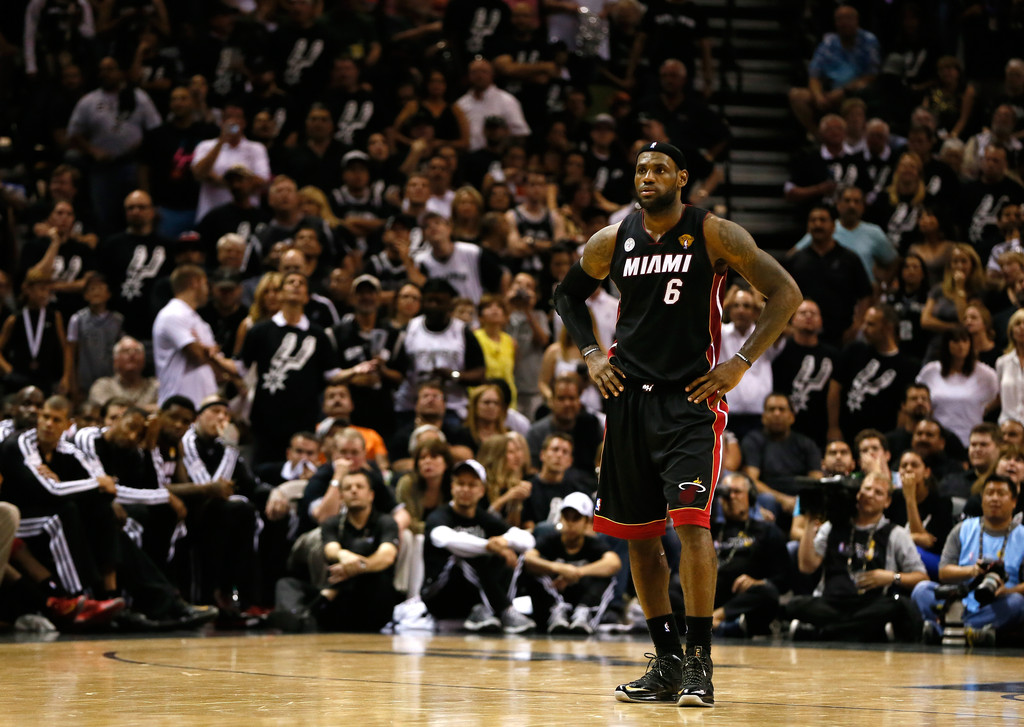
As LeBron James continues to ascend the Mount Olympus of NBA greats – as he stars in more and more fuzzy commercials showing his paternal, personable and proletariat side and tacks on to his multiple championships and 5 MVPs, each chipping away at the all but faded opinion he was a choker – it’s easy to forget he was the most detested figure in the NBA.
That was a mere 3 years ago, back when Call Me Maybe was climbing the charts.
Upon issuing his infamous South Beach declaration, the world descended into an incredulous inquisition of the King. Louis XVI can relate. The preseason boiled with talking heads and experts postulating the possibilities. Would the Heat win 75 games? Would they collapse under the pressure? Would LeBron or Wade be the alpha dog? The subtext though was always cynical, or skeptical, and often fanatical. The fans, you see, devised ways to tear down Colossus.
James endured what may be the most intense season of scrutiny, fickle revisionism and biased criticism in NBA history. The emergence of social media platforms dove-tailed with 24-hour sports news ensured LeBron remained submerged under a slab of public opinion with no way out, like an intrepid hunter fallen through the ice. The only air pocket being an NBA championship, it was frozen over by Dirk Nowitzki and the Dallas Mavericks in the Finals, just out of James’s grasp. Trapped. Above the critics strode upon the surface, gazing below, mocking LeBron’s every doomed stroke.
While King James put up his worst statistical season in years, that’s like saying The Beatles’ Abbey Road wasn’t Sgt. Pepper’s. He still posted the best PER and win-shares in the league, among numerous other top 5 category finishes, while helping the Heat to 58 wins and the 2nd seed in the East. He was the rightful king.
The basketball world took him for granted. People used the spurned self-pity of the Cleveland faithful to manifest their own self-righteous feelings toward LeBron, the “spoiled star athlete.” Detractors would overrate the influence of Wade and Bosh on LeBron’s successes, and underrate it on his failures. Writers acknowledged the clamor for the guillotine, heeded the feedback from its critical, mistaken readers and voted for Rose, as if making a statement on behalf of the masses and shunning the future certainty people would actually double-check the statistics and judge their work with equal blog-worthy disdain.
That’s me.
Howard meanwhile, though not the hated man he became a year later when he began engaging in childish antics with the Orlando Magic about whether he would stay with the team or become a free agent, encountered another type of bias…
Conspirator #2: Misevaluation of Defense
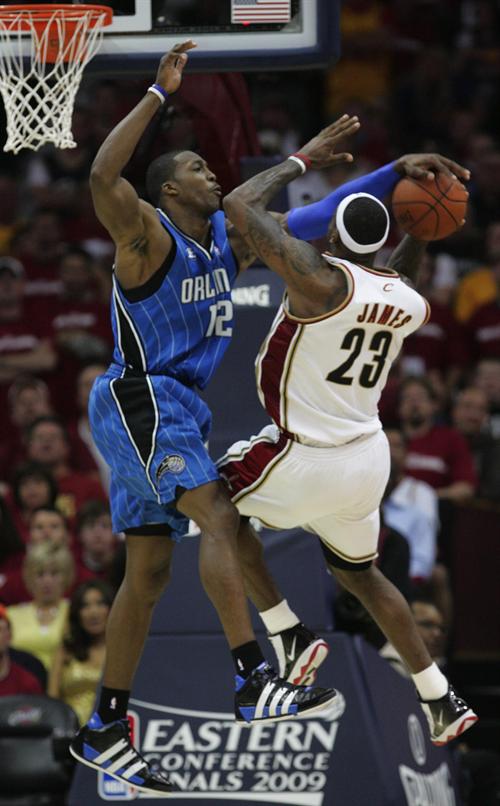
Offense draws eyeballs. Fans in every sport since the dawn of time have thirsted for the glamour and drama of the attack. Understandable, but defense is of equal importance. When determining the league’s most valuable player, it’s an often minimized characteristic when the ballots are cast.
Now, Derrick Rose was an able defender in 2011. Some even argue he was vastly underrated. Either way he falls short when compared to the elite – as in the 2 best defenders in the league elite.
Both Howard and LeBron were fierce in their own end of the court in 2010-11, earning themselves 1st All-Defensive Team nods while occupying top spots in most defensive metrics.
James is unfortunately never given the proper credit for his defense. At multiple points in his career he’s been both the best offensive player and defensive player in the league. His ability to guard opponent’s best players consistently – regardless of position – is nearly unprecedented. Even so, the outdated notion only a big man can be the best defensive player persists.
Howard, though, is a big man. In 2011 he was a paragon of defensive dominance, winning his third consecutive Defensive Player of the Year Award. He did so while maintaining excellent offensive production (FT% and passing ability besides), leading the Magic to the 4th best record in the East. If Rose received credit for improving his defense, D12 should’ve felt the love for his offense.
So defense wasn’t given it’s proper due, what else is new? Surely there was something else aiding Rose’s cause…
Conspirator #3: The Boredom Complex
Sports writers have a propensity to, at times randomly and at other times prompted by the slightest change in perceived momentum toward another competitor, vote for someone undeserving of a major award.
Co-conspiring against James and Howard were their trophy cases. James won the previous two MVPs, Howard the previous two DPOY awards. When it comes to award season, recent success actually hurts a player’s chances.
Howard’s 3rd defensive distinction in 2011 impacted his MVP vote totals, too. “If I vote Howard for DPOY I can vote someone else for MVP” was the likely thought process, instead of allowing the award to help his case for MVP.
For James it would’ve been along the lines of “Well he always wins it, and he’ll win more in the future… let someone else have it.” Even when looking at this year’s MVP decision between Kevin Durant and LeBron, doesn’t it seem odd the vote ended in a landslide? I mean 119 first place votes to 6 in favor of Durant? Sure he deserved to win, but it was a dead heat for most of the season. Someone even voted LeBron 3rd behind Blake Griffin! Maybe I’m looking too much into it, but voter shadiness is beyond frustrating.
You know the league loves it, too. The more MVPs and new stars the more marketing opportunities. Routine is boring, even if it’s exceptional. People want the next big thing, and in this case a young athletic point guard fit the bill perfectly. He embodied boredom’s antithetical sibling: excitement.
There is no denying Rose’s ability to draw one out of his or her seat. He was widely regarded as the most exciting player on the court, thanks to his equine abilities. But the brightest coals don’t produce the most heat, and the voters let the shiny object distract them from the best toys in the play pen.
Conspirator #4: The “He’s Does More With Less” Misnomer
The popular axiom of the year was the notion Chicago had inferior talent compared to the other contenders; that is, Derrick Rose prodded the Bulls’ success in spite of his teammates. Much of this was incorrectly based upon Chicago’s previous season when they finished 8th place and endured a quick 1st round exit thanks to the LeBron-helmed Cleveland Cavaliers. But during the offseason the Bulls were not idle, nor were they sitting with a bunch of plugs on their roster.

Rose (With Other Good Players)
Joakim Noah
Today he’s widely considered one of the best centers in the association, and he possessed the same talent in 2011 that makes him the Bulls’ best player in 2014. His defensive prowess, rebounding bravura, and impeccable passing skills were all present during Rose’s peak, though less developed. The point is Derrick Rose had an emerging superstar to help him out down low, something most guards never have the luxury of.
Luol Deng
While no superstar, Deng was one of the best secondary options in the NBA for years. He was a perfect fit for Chicago’s defensive system under Tom Thibodeau, guarding the perimeter and providing effective offense, especially when left open during a Rose assault to the lane. He would become a two-time All-Star in 2012 and 2013.
Carlos Boozer
If LeBron stayed in Cleveland, Boozer would’ve garnered far more headlines as one of the biggest offseason moves of the year. Chicago signed him to a 5-year, $80 million contract after all. Instead, the former US Olympian was virtually forgotten, left to “succeed quietly” for the Bulls while “the Heatles” hogged all of the attention.
…
The rest of the roster was admittedly poor, but it still had 3-ball specialist Kyle Korver, Turkish import Omar Asik, a rookie Taj Gibson and veteran Ronnie Brewer.
The Heat, beyond the Big 3, had the superstars known as Mario Chalmers, Zydrunas Ilgauskus, Udonis Haslem and about a dozen other veteran misfits fighting over the scraps of the head table. Hardly impressive.
The Magic had a lot of names you’d recognize, but if you can transport yourself back to 2011 you’ll remember Howard’s best wingman was Jameer Nelson. Yikes. Ryan Anderson wasn’t Ryan Anderson yet. Vince Carter was still “post-Nets Vince Carter,” and guys like Hedo Turkoglu and JJ Redick didn’t do anything out of the ordinary.
The Bulls’ pieces fit. While they certainly didn’t have the star power of the Miami Heat, they were a far cry better than claimed, and borderline dominant next to the lack of skill Dwight Howard had around him in Orlando. Either way stop with the no talent junk. Especially when…
Conspirator #5: Nobody Knew Coach Thibodeau Was Amazing
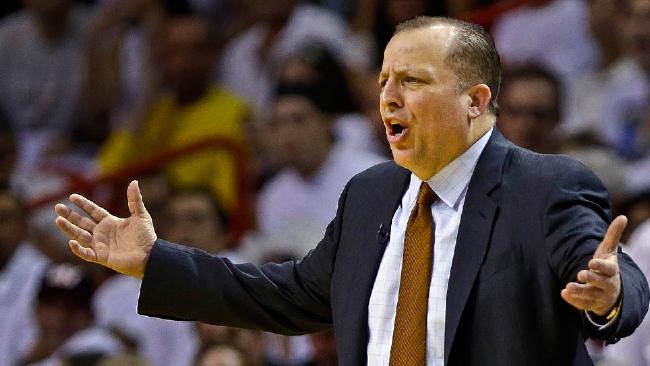
When the Bulls vaulted to 62-20 and the #1 seed, everyone pointed to D-Rose. What else could it be? “Sure Thibodeau is doing fine work” they’d say, “but it’s not hard when you have Derrick Rose.”
If you polled the same people again today, how many would change their answer?
Tom Thibodeau was a first-year head coach, brought over from the Boston Celtics after years serving and learning under Doc Rivers. Today he is regarded as one of the top coaches in the league. His defensive schemes and ability to inspire maximum effort and responsibility to the team are renowned.
Having Rose in ’10-’11 was nice, but recent history shows he wasn’t vital. The Bulls have accomplished the following since Rose went down during the 2011-2012 season:
2012: Repeated as the #1 seed and tied for the best record in the NBA, losing to the 8th-seeded 76ers in 6 games after Rose was re-injured in Game 1 and Noah missed Games 4-6 with a foot injury.
2013: Won 47 games and the 5th seed, losing to the Heat in Round 2 despite Rose missing the entire season.
2014: After Rose went down for the season after only 10 games, the Bulls went on to win 48 games and the 4th seed, losing to the Washington Wizards in Round 1.
This doesn’t mean Derrick Rose isn’t valuable. You don’t see any NBA titles or Finals appearances in the above list, and his absence may be the reason why. This is merely to show how effective Thibodeau was and is as a coach, how he’s been able to overcome and succeed despite losing his best player – to show Chicago’s real 2011 MVP didn’t wear a uniform.
—
I think we can all agree 2010-2011 presented us with one of the most contentious MVP races in recent memory. I hate pushing back against a genuinely superb year for our victor, Derrick Rose, and 2,200 words seems unnecessary when looking at his individual and team accomplishments, but I can’t deny my hatred for mercurial hype in the face of logic. Would LeBron have won had he been traded to the Heat, or if he broke the news of his signing in a statement? Would Howard have won if he made more highlight reel plays, or didn’t play in Orlando? What if Tom Thibodeau was in his 2nd year as the Bulls head coach? What if it was 2001, without 24-hour sports coverage, Twitter and blogs (#hypocritesighting)?
Does it matter? Probably not, but it’s fun to talk about. The factors may be too many to weigh, but I’m convinced Derrick Rose’s side of the scale had 5 helping fingers pressing it down.


 Enjoy the Ride