So The NHL Genie Gives You 3 Wishes…

Suspend your disbelief a moment and pretend I’m Aladdin.  First of all, don’t act like you’ve never fantasized yourself as a Disney character; and second, this post will be far more entertaining if every word is Tinker Bell-ed with the magic of Walt.

So I’m Aladdin.  Suspend your disbelief further and imagine I’m also a hockey fan.  And I like candy sunsets.  With unicorn rainbows.  Because imagination is fun.

It goes without saying life is pretty tough on the streets living a nefarious existence as a thief with only a monkey and some puck to entertain myself.  But I can dream!  I can dream of a better life, Princess Jasmine and a strap for Abu’s hat!  I can also dream of a better NHL, because whom among any serious hockey fan doesn’t postulate over ways to improve the great frozen game?

Well imagine I’m cast into a cave (my basement) filled with endless treasure (my sports memorabilia) thanks to the shady Jafar (fate).  Before my imprisonment I happen to steal the magic lamp, upon which I give a casual rub, and POOF! – a mix of Robin Williams, Casper and the Blue Man Group emerges with a fine song and dance routine.
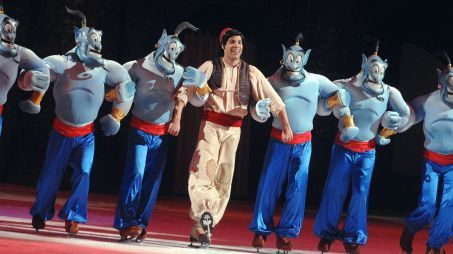
Aladdin on Ice

…on ice

Yadda yadda yadda, I get three wishes.  Now Jasmine can wait, and as the only Persian hockey fan in the 16th century I have a lot of issues with winter’s favorite game.  But I have to pick three.

Naturally I decide to use them all to fix the NHL schedule…

WISH #1: START EVERY REGULAR SEASON SEPTEMBER 1st

One of the NHL’s key problems is its failure to maximize its exposure on the sports calendar.  They probably think they’re doing a fine job, of course, but they would also be Iago in this story.

As it stands, the season is 9 months long from training camp to Stanley Cup parade.  It stacks right on top (or rather below) the NFL season, the NBA season, March Madness and various other events like The Masters.  Obviously, it’s impossible to avoid scheduling conflicts entirely, but the NHL needs a serious fine tuning in order to command as much attention as possible.

A good place to start is, well, the start of the season.  In places where hockey measures (Canada and the northern US), autumn starts in September.  People are ready for hockey in September.  Folks start to get excited for the NHL in August, then September rolls around and they have to endure 3 weeks of training camp and a horrid preseason.  Why?  When kids everywhere begin their minor hockey seasons, why do the pros lag behind?  Many of the league’s coaches and players admit they don’t need 8 preseason games.  They’ve already been training for weeks, the people want it, so what’s the holdup?

Start training camps in mid August, cut the preseason in half (4 games) and begin September 1st.  The playoffs would then begin in early March and finish in mid-late May, shifting the focus in their favor.

Sept 1st

The fixed start date is important.  The way it is now, no one knows when the season begins.  Some years it’s the first week of October while in others like an Olympics season it’s the second week.  Stop it.  Picking one opening night and sticking with it, whether it’s on the weekend or a Tuesday, will add consistency and a powerful branding tool to breed more fans.  It provides something to look forward to on a yearly basis.  You won’t notice the results the first year, or the second, but in time even the most casual hockey fan will come to know September 1st as the first day of hockey, much like Christmas Day has become known for the NBA or American Thanksgiving for the NFL.

But Magic Carpet Points Out: “What about the start of the NFL season?”

True, the NFL season begins in early September as well.  The first Thursday after Labor Day in fact.  So what?  Week 2 of the NFL preseason dwarfs NHL regular season numbers in the US (For example, one of the lowest rated NFL preseason games of 2013 earned a 4.2 rating, while the recent Maple Leafs vs. Red Wings “Winter Classic” earned a 2.5).  Beginning the season in the build-up to the NFL’s kickoff hardly matters.  Besides, the 1st is before Labor Day so you’ll actually beat football to the punch.

On this note, why in the name of Raja does the NHL schedule hockey on Superbowl Sunday?  Or during the final round of The Masters?  We know the dates of those events like 5 years in advance – pick another day.  If this sounds subservient then get real, hockey was just listed behind auto racing in the US in terms of popularity.  Pick your spots, don’t pick a fight you’ll lose.

WISH #2 – REDUCE SEASON TO 58 GAMES (HOME-AND-HOME AGAINST EACH TEAM)
Even those crazy Brits agree…

Obviously.  Hockey shouldn’t be played in May, let alone June.  Seemingly everyone agrees with this.  Fans, players, whomever.  In what universe, real or Disney, do people want to watch hockey when it’s 70+ degrees outside?  They don’t.  Not even Canadians do.

Owners do, of course, and while I agree with making money and all I sincerely doubt the current situation screams dollar signs.  In Economics 101 parlance, I doubt the marginal utility of the number of games played is at its peak (this is the part when a better journalist would provide you with charts and graphs backing up their claim).  The product is over-saturated.  There is no scarcity.

It shouldn’t surprise anyone part of the NFL’s ridiculous success can be attributed to the fact it is – by far – the most palatable sport of the major 3 1/2.  Its schedule is the most agreeable with the way we consume our entertainment.  16 games over 17 weeks plus playoffs.  Games played almost entirely on Sundays.  6 months from training camp to Super Bowl.  It’s easy to fit into the schedule and conducive to interaction on social media, around the water cooler or with your future Sultan father-in-law at Thanksgiving dinner.

To remind you, the NHL is 9 months from training camp to Stanley Cup… NINE.  The games are scattered haphazardly throughout the week, making constant schedule checks necessary if you want to know when you’re favorite team plays (more on this in Wish #3).  So few – let alone the younger target audience – have patience for this.

Play each team once in each other’s barns.  29 opponents.  58 games.

But Abu Points Out: “What about the owners?  Would they ever go for this?”

Good question, biped.

It will probably take Jafar’s hypnotic staff to convince owners less games would strengthen hockey’s demand.  But surely there are some who can see 58 games would drastically increase each game’s importance and decrease player injury risk?  Surely there are owners who realize live rights in television and internet is the future, not admissions and concessions?

Yes a leap of faith is required… “One Jump” if you will.  Even the Genie will have a hard time with this one.

WISH #3 – EACH TEAM PLAYS TUESDAY, THURSDAY & SATURDAY
Calendar

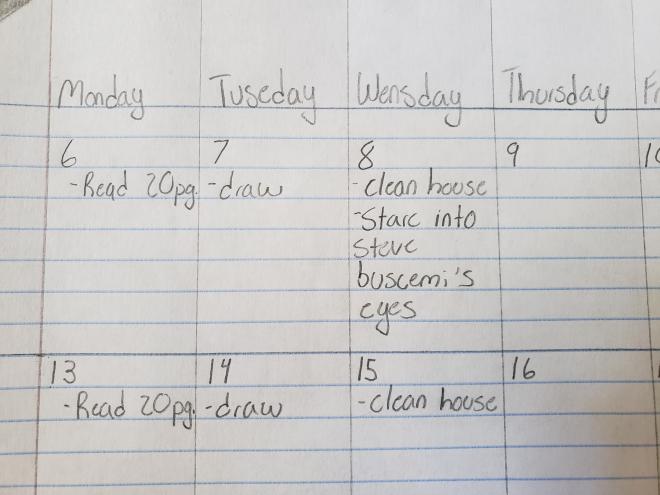
“Wensdays” are for Steve Buscemi

Dovetailing with my first 2 wishes, predictability is essential to the modern audience.  The NFL plays on Sunday, The Masters takes place the first weekend of April, and Nathan’s Hot Dog Eating Contest goes down on the 4th of July.  These are glorious spectacles and even casual fans know what’s up.

I mapped it all out.  If each team plays every Tuesday, Thursday & Saturday (note there are no NFL Sundays to contend with) then with our September 1st start date and 58 games the NHL will finish their regular season at the end of January – and that’s including a week off for Christmas!

Cue the “Prince Ali ” entrance music!

There are so many good elements to this:

1) The fans will love it.  Imagine, you will know when your favorite teams plays!  And so will Hakim and he’s just a fringe fan in order to have something in common with his guards.

2) The players and team staffs will love it… and just think, the owners could likely leverage this with a better deal in the CBA.

3) Gambling will increase… Maybe even by a lot (this is a good thing for driving interest in your sport).  With so many games played each game night it’s a gambler’s dream.  Gazeem would approve.

4) The playoffs will be center stage.  Hockey is blessed to have the stigma its playoffs are one of the best there is, so why minimize it by casting it into the sunny distraction that is summer?

With this schedule you can begin the playoffs first thing in February (but after the Superbowl), thus ending in early April.  The March Madness conflict will now only apply to hockey’s final rounds (the first rounds are the highest rated anyway) and the Cup will be handed out before The Masters and before the NBA begins its postseason.

A whole new world…

But Raja Points Out: “Actually I got nothin’ this makes too much sense.”

BONUS WISH – MAKE THE ALL STAR GAME THE ONLY OUTDOOR GAME… ON NEW YEAR’S DAY

wclass

Oh I tricked the Genie into 1 more wish again!

Outdoor hockey is good times.  It’s the only time hockey is allowed to wax poetic about itself without the baseball community setting the world on fire in a territorial rage.  But in a year with SIX outdoor contests, about 254 television profiles on “How they Build the Rink!” and the weather forecasts a constant league-wide obsession it’s safe to say the “Winter Classic” is becoming redundant.  Sure it’s fun for the host city and sure it’s a cash cow, but by next year it will seem like every team and their affiliates will have hosted a “Winter Classic” since Breaking Bad ended, so let’s pull on the reins.

This isn’t another attempt to cure the woes of the All-Star game.  Until you give each player a strong incentive to try, it’ll remain the indolent time killer it is.  No, this is to add even more pomp and circumstance to the exhibition it is, sparing everyone the need to apologize for the lack of on-ice entertainment.  Continue to rotate cities and venues.  Continue to have the fantasy draft selection process.  Just hold the game outdoors and on New Years Day.

As with the September 1st start date, the branding potential for a fixed All-Star Game is huge.  In a few short years the NHL will own at least one day in January, one more day than it currently owns at any point during the regular season.

But Abu Points Out: “What about the skills competition and World Juniors conflict?”

As for the skills competition, who wouldn’t love an outdoor NYE skills competition?  Sure the terrible ice and potential inclement weather will make it worse, but until the NHL implements the old NBA policy of inviting the best players at their respective skills – All-Star or not – no one will remember the winners anyway.

The World Juniors is the real wrench in this plan.  Canadians are so infatuated with the holiday season tournament it will be hard to lure their eyes toward All-Star weekend.  America on the other hand doesn’t seem to care about the WJC, so what have you got to lose?

Genie

… So after 4 wishes we have a significantly shorter, predictable and therefore desirable NHL season.  The season will start the same day every year, with 58 games played over 3-game weeks with a holiday break in between.  The season will finish right as the snow melts.  And to top it off we’ll have an outdoor New Years Day All-star exhibition.

Simple wishes even a street rat dream up.  Now I just need that lamp…
The Most Game-Changing Athletes In The Last 20 Years

People like to debate the best.  Deciding the best movies, best restaurants or best bands is sure to spurn you into the cranium’s filing cabinet like little else.  If I say Catcher in the Rye is the greatest American novel ever, you’ll have a list of reasons why it’s The Great Gatsby.  Well nothing gets a sports fan leaning across the table in anticipation faster than posing the question, “Who is the best athlete of all time?”

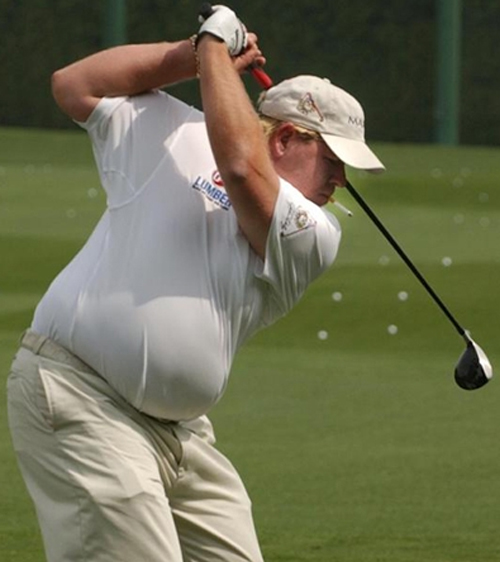
John Daly Is Probably Your Answer

If You Said John Daly, You Win

There are variations of the above query, each as engaging as the next.  So I pose my own challenge:  Who are the most game-changing athletes of the last 20 years?

Game-changing is not the same as best.  It’s more like transcendent.  You need to think of athletes who weren’t just good, but who changed the way people thought about his or her sport.  Who started trends lasting years into their careers or after they retired?  Who could force you to jump out of your seat and think “I may never see something like this again.”  There aren’t many.  Entertainment is the key component.  We watch sports because it involves the extraordinary.  The funniest comedians or the most inspirational films are often the most original, as are the most awe-inspiring athletes; those who can do what most cannot.

In the interest of time and effort, I’ll keep it to the four major sports, so don’t cry when you notice an absent Tiger Woods, Jonah Lomu or Serena Williams below, to name a few.  So, beginning with two exceptions, here are the most game-changing athletes, in the 4 major North American sports, of the last 20 years:

Special Exceptions:

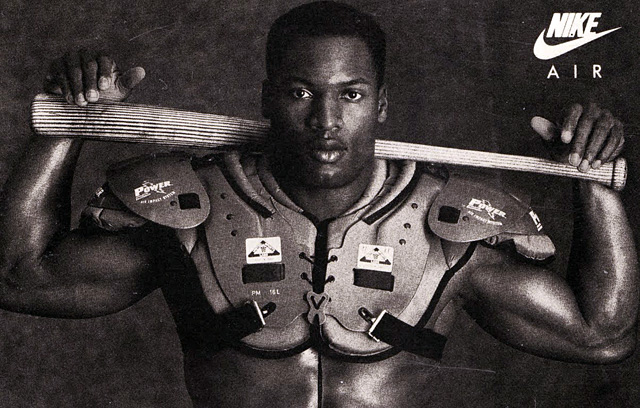
Bo Jackson and Deion Sanders.  These guys, both NFL and MLB stars, made ordinary single-sport athletes boring.  While there were many baseball/football professionals before them (and a handful afterward), Bo and Deion rectified the feat at the highest level in the modern era.  They put the marketing money machine into overdrive.  We love multi-sport athletes because God wasn’t supposed to make stars in more than one, especially sports requiring such a special blend of size, strength, agility and speed.

Bo Jackson was simply better than everyone else, and is arguably the best athlete of the 20th century.  The brightest flames burn fastest, however, as he was only around a few years before a dislocated hip he suffered during a football game in 1991 essentially ended his career.  Yet before his retirement(s) he became an all-star in both the NFL and MLB, the only person to do so.  He was also an elite track star in college, and he holds the record for the fastest 40-yard dash time at the NFL Combine at 4.12 seconds, an absurd quality in light of his massive build.

Absurd

Above: Absurd

His numbers, frankly, are modest, but anyone who watched Bo play could see beyond the statistics.  In baseball he compiled a career .250 average with 141 home runs in 694 games.  The homers are nice (could he have hit 500?), but his career 841 strikeouts, .309 OBP and .474 OPS are nothing special.  Yet along with his obvious power advantage, it was his base-running and fielding abilities that set him apart, thanks to his conflagrant speed and Hellboy arm.  He probably would’ve broke YouTube if he and his many highlights occurred today.

Even though he preferred baseball, many argue Jackson’s real prowess was in football (Bo considered playing football in the offseason a “hobby”).  After winning the Heisman trophy in 1985, capping off a historic four-year run at Auburn, he began his NFL career with the LA Raiders two years later.  As a backup to Hall-of-Famer Marcus Allen, he dazzled in 4 NFL seasons by way of some of the most dominant running performances ever seen on a football field.  He would bowl over linebackers then sprint past defensive backs, seemingly mutating mid-run from tractor halfback to Ducati wideout.

The spectacle around him was intense.  “Bo Knows” is an iconic marketing campaign, vaulting Nike ahead of Reebok and redefining what people thought about the potential of the human body.  He even tried his hand at semi-pro basketball to push the multi-sport angle before focusing on his baseball comeback.  Due to injuries and his attempt to balance two jobs, he remains the epitome of the “What if?” athlete….

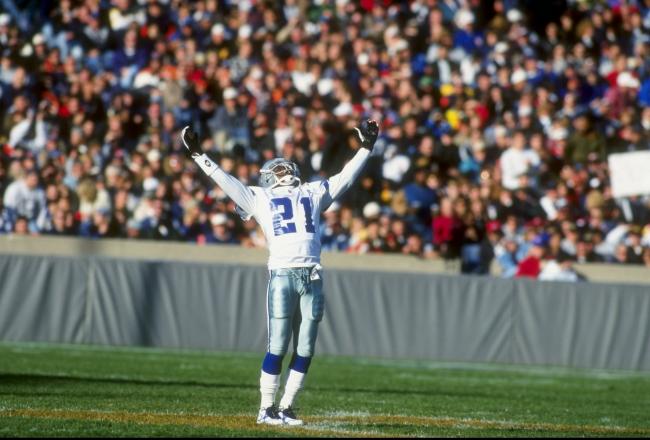
Deion Sanders would often say “football is my wife and baseball is my mistress.”  While he never came close in baseball to his Hall of Fame career in football, “Prime Time” joined, and ultimately succeeded, Bo Jackson as the face of the dual-sport athlete.

Primetime

Not That He Craved The Attention Or Anything…

In baseball, he relied on his track star speed to be effective (coincidentally, his 4.27 second Combine time stood 2nd behind Bo Jackson’s record for 16 years).  However, effective was all one could really call him, and not even that since he played over 100 games just once in his 9-year career.  He led the league in triples in 1992 with 14 and finished second in the NL with 56 stolen bases in 1997, but his career highlight came during the 1992 World Series when he hit .533 with a broken foot bone.

In football he is perhaps the best cornerback of all time.  Maybe the best punt/kick returner too.  Not bad.  He racked up over 5500 punt/kick return yards with 9 TDs, and, while this is an incomplete measure of a defensive back, 53 career interceptions with 9 TDs.  Oh yeah, he also had over 700 career receiving yards.  He won the Defensive Player of the Year in 1994 and was an All-Pro an obscene 8 times.  He won a Superbowl with the 49ers in ’94 and with the Cowboys in ’95.

Needless to say, “Neon Deion” was an incredible athlete.  Like Jackson, the endorsement angle garnered him a massive amount of attention, boosted by his flamboyant personality and famous “do-rag.”  It’s hard to imagine an athlete garnering more of a following over such a large percentage of the sports world.

—————————

Alright, with those two out of the way, let’s get to the “mere” single sport game-changers:

National Football League

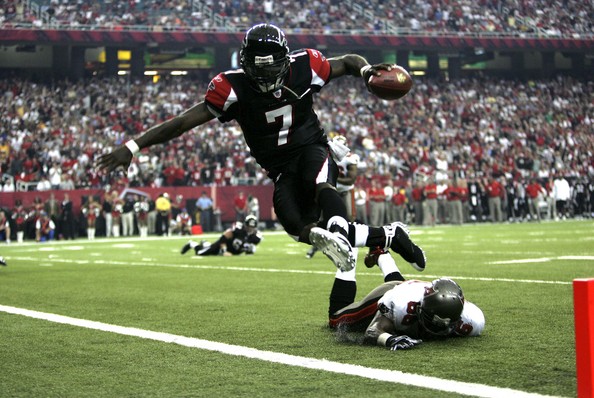
I’ll start with the NFL because it’s the easiest.  It’s Michael Vick and it isn’t close.

Sports+Pictures+Week+September+18+l3DObhY5A6Tl

We’ll Leave The Dog Fighting Stuff Out Of It

First of all, it has to be a quarterback.  Running backs run, wide receiver catch, and defenders tackle and create turnovers.  Those are generalizations, obviously, but it doesn’t matter.  Quarterbacks have and always will dominate the game.  When you throw Vick into the cauldron, someone who at his peak could throw as hard as anyone and be literally the fastest player on the field most games he played in, the new concoction posed an unprecedented challenge to NFL defenses.

Once selected with the 1st overall pick in the 2001 draft by the Atlanta Falcons, Vick quickly became the game’s biggest star.  His running ability was exhilarating, and when healthy he racked up numerous rushing records.  In 2006, the only season he played all 16 games, he became the only QB in history to rush for over 1000 yards.

He saturated the headlines and significantly influenced the direction of the league.  Since 2001, how many teams have sought out, or at least secretly desired, running quarterbacks to build their teams around?  Most of them is the correct answer.  The scoring potential is simply too great, to say nothing of the potential ticket sales.  Fans are fickle, entranced by the “next big thing.”  Alex Smith, Philip Rivers, Ben Roethlisberger, Vince Young and JaMarcus Russell were all selected with top picks, all of them “dual-threat” helmsmen.  It’s a big reason why NFL teams still can’t seem to give up on Tim Tebow.  In fact, Vick was so dynamic at the pro level, college teams soon realized they could recruit the best athletic quarterbacks if they tailored their offenses around the Vick prototype, since those QBs would have a greater chance of being drafted.  Chris Ault’s University of Nevada pistol offense, famous for popularizing the read-option with Colin Kaepernick, is a great example of this.  Today, a new wave of athletic quarterbacks like Cam Newton, Robert Griffin III, Russell Wilson and the aforementioned Kaepernick are the league’s poster boys.  Even Andrew Luck, a good runner himself and the best pocket passing college quarterback since Peyton Manning, has his doubters because his running ability doesn’t match those of the above group.

Sure there were other dynamic running quarterbacks in our 20-year window.  Steve Young, Randall Cunningham and Donovan McNabb, amongst others, were around before Vick showed up.  But none of them could, or more importantly, wanted to run like Vick.  In hindsight, that was often Vick’s undoing, as he bailed on his progressions much too soon too often, giving defenses an out and often getting hurt in the process.  He has some years left to make improvements, but his passing ability is simply too one-dimensional; great strength but little touch.  That is, with the exception of 2010.  It’s no coincidence his most successful season was easily his best passing season:

13 GS, 68.01 QBR, 62.6 Cmp%, 3018 PaYds, 21 TDs, 6 Ints… with 676 RuYds, 6.8 RuAvg, 9 TDs

There are certainly better players in the last two decades, especially when you include Vick’s humble playoff abstract.  But considering the definition of “game-changing,” Vick’s never-before-seen skills at football’s most important position revolutionized the modern NFL unlike anyone else.

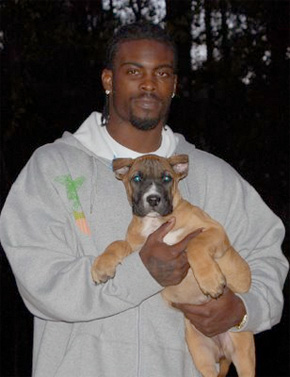
Alright Fine, One Dog Photo

Alright Fine, One Dog Photo

Honorable Mention: Peyton Manning and Tom Brady, because they’re maybe the two best quarterbacks ever… and for the token non-QB let’s go with LaDainian Tomlinson, the man ostensibly traded for Vick on draft day.

Major League Baseball

Steroids changed baseball forever, which muddles and clarifies this argument at the same time.  It’s Barry Bonds.

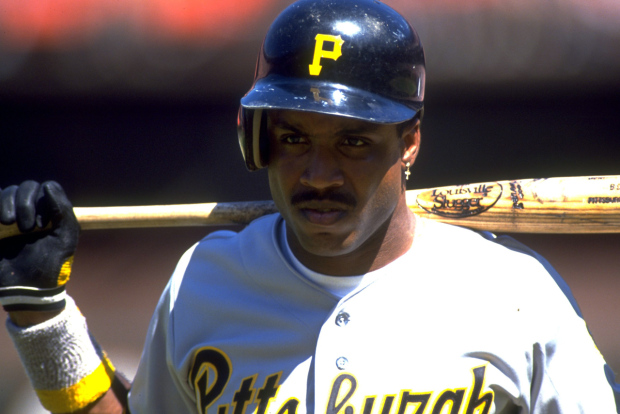
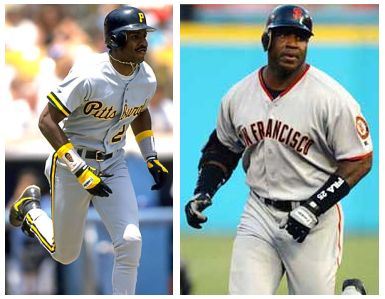
You can argue Mark McGwire and Sammy Sosa started the whole thing with their magical 1998 single season home run record quest, but Bonds trumped it and more.  Not only because he smashed McGwire’s record with 73 HRs in one season, not only because he surpassed Hank Aaron’s all-time record of 752 HR, but because he serves as the poster child for PED transformation.  No one was as talented before AND after using steroids.  Not A-Rod.  Not McGwire.  Nobody.

barry_bonds_285036_620x414

No One Was Angrier Before And After Either

In the early 1990s, Bonds was simply the Hall of Fame progeny of former MLB all-star Bobby Bonds.  He was well on his way to becoming one of the best players of all time, both offensively and defensively. He was a superstar, despite his abrasive nature, and relished the accolades he’d garnered all his life.  Enter 1998, when he watched his NL throne (Ken Griffey Jr. owned the AL) usurped by two massive, 500-foot homer smashing guys in St. Louis and Chicago.  What were McGwire and Sosa doing to make themselves so good?  Bonds knew, of course, and he couldn’t stand missing out on the fame and fortune steroids provided.

His body transformation is the butt of many jokes, as it should be.  His head and feet size increased significantly, as well as his body.  Well so did his stats.  In the 5 seasons from 2000-2004 and between the ages of 35 and 39, he won 4 MVPs, hit 258 HR, posted an 872:316 walk-to-strikeout ratio, and earned an OPS of 1.316.  That doesn’t even sound real.  He was so feared teams would often walk him with no one on base, and he was once intentionally walked with the bases loaded!  The best player of our generation was now arguably the best player ever.

As Bonds chased down Hank Aaron’s all-time home run mark, the heat approached nuclear on the steroid issue.  As years have passed cheaters have been caught, suspended, caught again, subpoenaed, brought before congress, or disowned by most of baseball, evident by the recent Hall of Fame vote when no one was selected.  Even still, drugs are an unfortunate part of the game’s history (though they were technically legal).  As time crawls by and the scope of the problem becomes clearer in the rearview mirror, the opinion of Bonds is almost softening, because we don’t really know what to think of it all.  All we know is Bonds is the example used by both sides of the argument… and our argument.

(Both Sides Of The Argument)

(Both Sides Of The Argument)

Honorable Mention: It’d be nice if I could present to you a (presumably) clean list, but over the last 20 years steroids have defined baseball.  For argument’s sake I’ll go with Griffey Jr., Albert Pujols, Randy Johnson, Pedro Martinez and Mariano Rivera.  Unfortunately, Alex Rodriguez is the appropriate answer.  A-Rod has taken up Bonds’s mantle, both because of his pre and post steroid success, and because he’s equally despised.

National Basketball Association

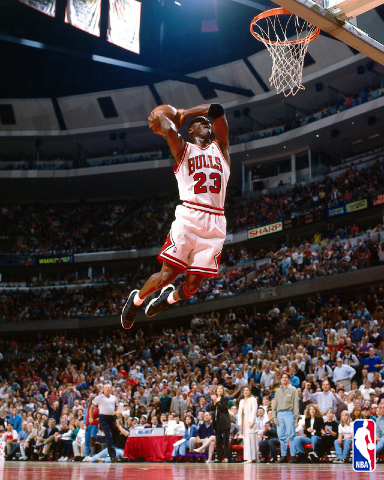
Now it’s getting tough.  I’d really like to proclaim a tie for this, but that’d be like proclaiming a tie.  No good.  It’s basically one guy’s 2nd half career vs. another guy’s 1st half.  So with a very important honorable mention, I’ll go with Michael Jordan.

michael_jordan-1166

Or Air Jordan If You Prefer

At first thought I’m crazy to suggest otherwise.  He’s the best player ever.  It’s blasphemy!  But remember, in the last twenty years we only have half of Jordan’s resumé.  Since 1993, it includes three retirements, a mediocre one-year stint in AA baseball and an awkward two seasons in Washington to round out his NBA career.  On the other hand, he has 4 titles, numerous awards, all while looming as the richest marketing juggernaut in sports history.  Sure my 20-year deadline is a technicality, and it’s fair to include at least a residual effect of Jordan’s monumental achievements prior to ’93, but there’s a significant argument to be made that LeBron James deserves the most game-changing title in the last two decades.  (For those of you who expected me to say Kobe, you’re excused).

Jordan, though, made basketball the most popular sport on the continent for most of the 1990s.  His dominance was everywhere.  On the court, he played with a nightmarish intensity every single game.  He employed a relentless offensive and defensive attack, and like many of top athletes he seemed to always improve.  He began as an average shooter only to become one of the best ever.  When age began to catch up to him he developed his famous fadeaway jumper,  the most unguardable shot ever behind Kareem Abdul-Jabbar’s skyhook.  If you like numbers, he accomplished the following (I’ll go with his whole career for simplicity’s sake):

5 MVPs, 6 NBA titles, 6 Finals MVPs, Rookie of the Year (1983), Defensive Player of the Year (1988), 10x All-NBA First Team, 9x All-Defensive First Team, 14x All-Star…

27.9 PER, 32,000+ Points, 2500+ Steals, 5600+ Assists,  6600+ Rebounds, Career 49.7 FG%, Career Playoff 28.6 PER, Career Playoff 48.7 FG%…

Merciful Christ.  The only noteworthy “mediocre” part of his game was his 3-point shooting and turnovers.  Some like to point out he played against softer competition, but keep in mind in his era hand-checking and hard fouls were commonplace.  Had he not retired twice, who knows how far apart he’d stand from the rest?

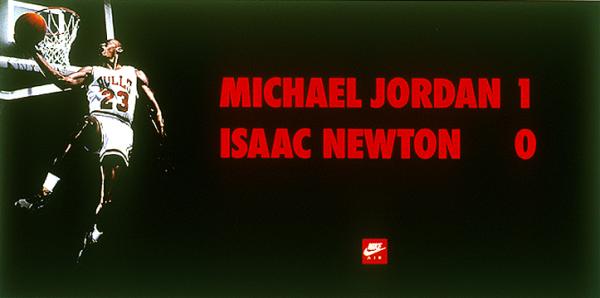
Off the court, he was the most recognizable athlete on the planet.  Endorsements with the likes of Nike and McDonalds, commercials, books, a clothing line and even the movie Space Jam all served as conduits for his larger-than-life persona.  In fact, in regards to Nike alone he might be the most game-changing athlete of all time, since the golden age of endorsement deals dawned with Jordan’s success.  Incredibly, he still makes an estimated $60 million per year from his stake in the Air Jordan brand.

nike-sportshoes-michael-jordan-small-24958

I Assume This Refers To The Fact Newton Never Made 60 Mil

Honorable Mention: King James is simply the most physically dominant basketball player since Shaquille O’Neal, if not ever.  The fact LeBron not only can, but consistently does guard every position on the court at an elite level is astounding.  His lack of a Defensive POY award is criminal.  Early in the 2012-13 season, he guarded Utah’s star center Al Jefferson in the 4th quarter, limiting Jefferson to maybe 2 or 3 touches.  Literally.  The next night, he guarded First Team point guard Chris Paul for large chunks of the game and shut him down.  He does this while maintaining Jordan-esque stat lines. He’s en route to his 4th MVP award, and in the brand department he’s a real challenger to becoming the first billionaire athlete.  But it’s clear while his 8+ years in the league have been nothing short of spectacular, he needs a few more years, rings and shoe designs to compete with His Airness.  As for Kobe, he’d be my fourth choice, behind James, Shaq and Kevin Garnett (as he was the catalyst of late 90s prep-to-pro players).  I don’t care if Jordan would start a franchise with Kobe… his judgement of talent is the one thing he’s terrible at.

National Hockey League

You see the pattern here, right?  The choices are getting harder, the answers as definitive as a bar room census.  Well here’s an easy one…

Nope.  Still hard.  Because it’s not Wayne Gretzky.

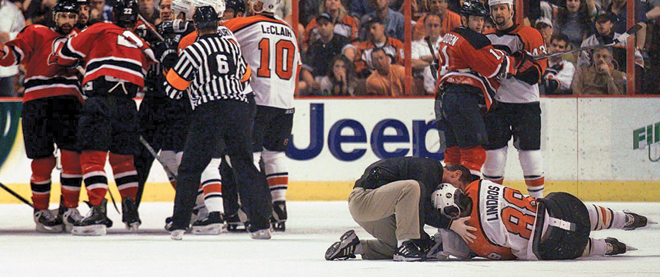
First of all, like Jordan, most of Gretzky’s dominance was prior to our 20-year cutoff.  Now, as with Jordan I’m going to acknowledge the legacy he built before ’93 was so mythical even his post-’93 shadow is tough to consider as anything but game-changing.  And it is.  But here’s the catch:  With Jordan, people felt he could still be matched or surpassed, even after he retired.  Whether through Kobe Bryant, Vince Carter or LeBron James, people felt – and still feel – like the NBA’s all-time crown is attainable.  In the NHL, Gretzky is so far ahead of anyone else (other than Bobby Orr) that by the time Mario Lemieux first retired and Scott Stevens almost killed Eric Lindros people just set him aside in his own category.  His legacy didn’t change the game because nobody could ever hope to duplicate it.  Sure, there are some born within our 20-year timeline who think Sidney Crosby will compare, but everyone grows up sometime…

So apply that context to the 90s hockey scene.  Most hockey fans and pro hockey brass were asking a lot of “what nows?” and “who’s next?” Who can we adore and idolize now that the best has left us?  Who can transcend and change the game?

Hockey is last for a reason.  This isn’t easy.  But out of the long list of candidates, I’ll go with the player who redefined the power forward prototype, the aforementioned Eric Lindros.

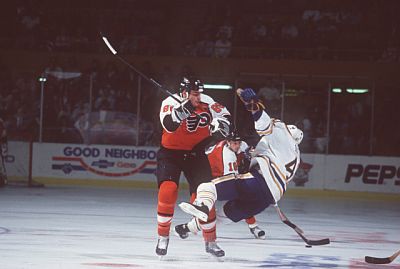
He's The Mutant On The Left

He’s The Mutant On The Left

Let’s start with the setting.  Throughout the 80s and early 90s scoring in the NHL was the highest it had been in 50 years.  After the player’s strike in 1994, things began to change.  Over the next decade scoring declined significantly, as defensive systems (the trap) and lax penalty standards suffocated the skill game.  Eric Lindros entered the league in 1992, the early stages of this transition… and he was perfect for the new NHL.

Lindros entered the league amidst incredible hype, proclaimed as hockey’s next Cam Neely and Messiah.  He was selected #1 overall by the Quebec Nordiques in 1991, only to be traded to the Philadelphia Flyers shortly thereafter in the weirdest draft saga ever (just look it up).  Upon finally making his league debut in 1992, Lindros quickly became stardom’s VIP.  He could score, pass, hit, and fight at an elite level; his punishing style of play made him the most devastating force in hockey.  In his first 5 seasons he had one of the highest PPG averages of all time.  He captained the Flyers and anchored the famous “Legion of Doom” line with John LeClair and Mikael Renberg. In his 1995 MVP season he scored 47 goals, 115 points, 163 penalty minutes and was +26  in only 73 games.

He formed the mold for what NHL teams lusted after in the new gritty league: Big and fast with a scoring touch.  Joe Thornton, Vincent Lecavalier, Rick Nash and Eric Staal were #1 picks for a reason.  Guys like Jarome Iginla, Jason Arnott or Glen Murray became prized possessions.  In junior, size and strength became baseline qualities in scouts’ eyes.  If you were small, you better be other-worldly to stand out among the big boys.  In other words, Lindros had an almost Vick-like effect on the National Hockey League and its farm systems alike.

What makes Lindros such a debatable pick is his longevity.  For about 3 years he stood atop the sandpile, but his reckless style wore him down with injury (he sounds like Vick more and more).  After the Scott Stevens hit (and a convenient contract dispute) kept him out of hockey for a year with a concussion, he was never the same.  He experienced 8 concussions throughout his career.  Even so, every team sought “the next Eric Lindros” all the way through the 2004-05 lockout.  Even after the missed season, someone remotely approaching Lindros’s blend of speed and size is an indispensable commodity.

Yi

So Long As Stevens Doesn’t Come Out Of Retirement

Honorable Mention: Gretzky, Lemieux, Mark Messier, Brett Hull & Steve Yzerman were all at their peak before 1993 and certainly better than Lindros.  Jaromir Jagr and Nicklas Lidstrom were contemporaries of Lindros and deserve mention.  Patrick Roy, Martin Brodeur and Dominik Hasek were the goalie considerations, but Jacques Plante and Vladislav Tretiak beat them to the “game-changing” punch decades earlier.

——————–

To conclude, the question of “Who are the most game-changing athletes in the last 20 years?” produces a good argument, as prefaced in the introduction.  Even though “game-changing” is a simple enough specification, it’s hard to divorce yourself from the best players.  How is Manning or Brady less impactful than Vick?  How are the second half of Jordan’s and Gretzky’s careers even questioned?  Why is Bonds not ignored completely in light of his steroid use?  All fair points.  But if you’re old enough to have seen the above actually play, you can’t deny their indelible impact on their respective sports, and the sports world in general.